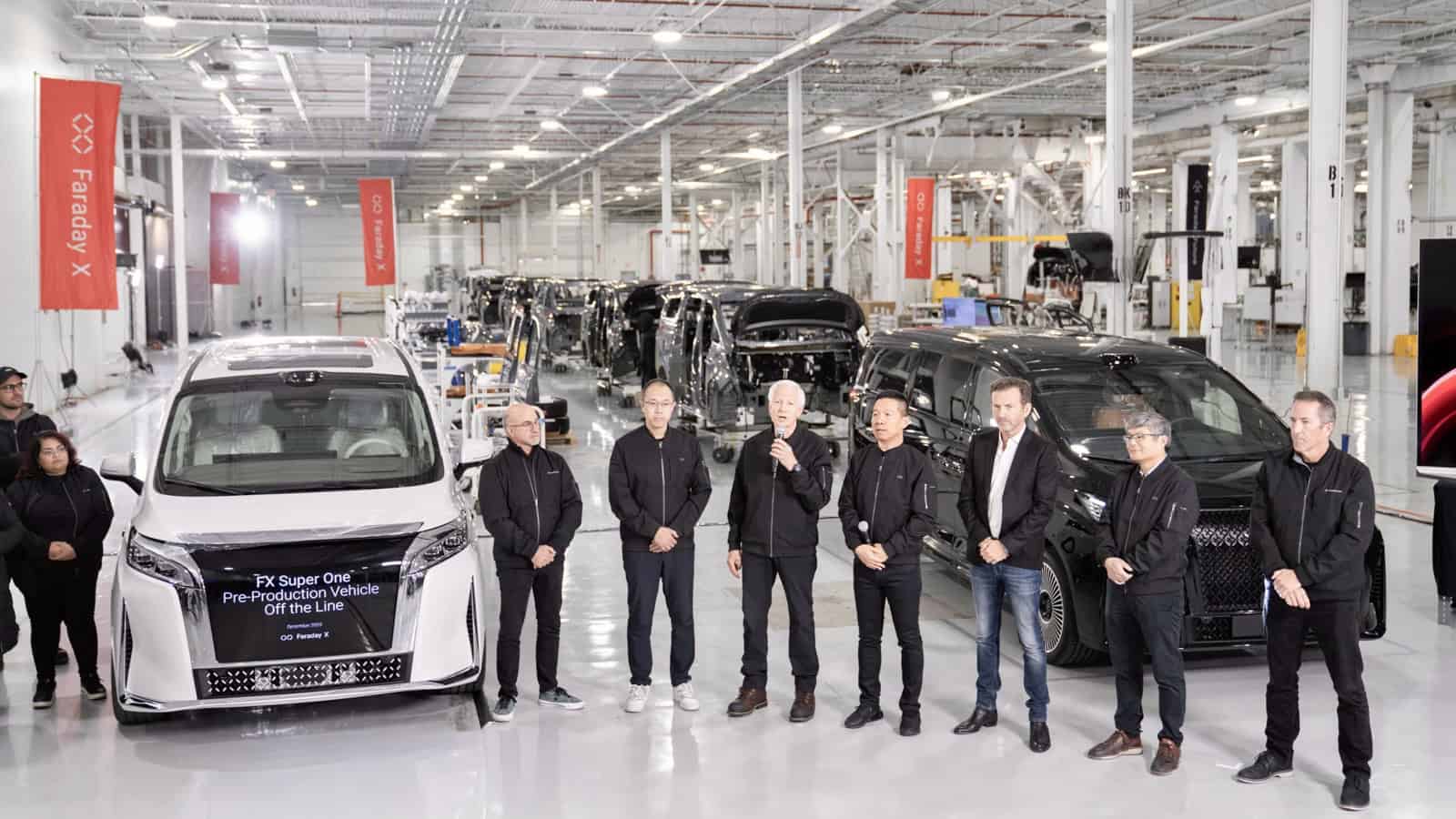
- The FX Super One pre-production MPV rolled off Faraday Future’s Hanford, California factory, confirming domestic production capability.
- The Super One targets premium family and business buyers with multi-row seating, advanced AI systems, and electric powertrain options.
- Faraday Future plans nationwide co-creation events and CES updates outlining mass production and sales plans for 2026.
ADVERTISEMENT
Something rare happened in Hanford, California, and it didn’t involve a concept car under dramatic lights. A real vehicle, built by real people, rolled off a real production line.
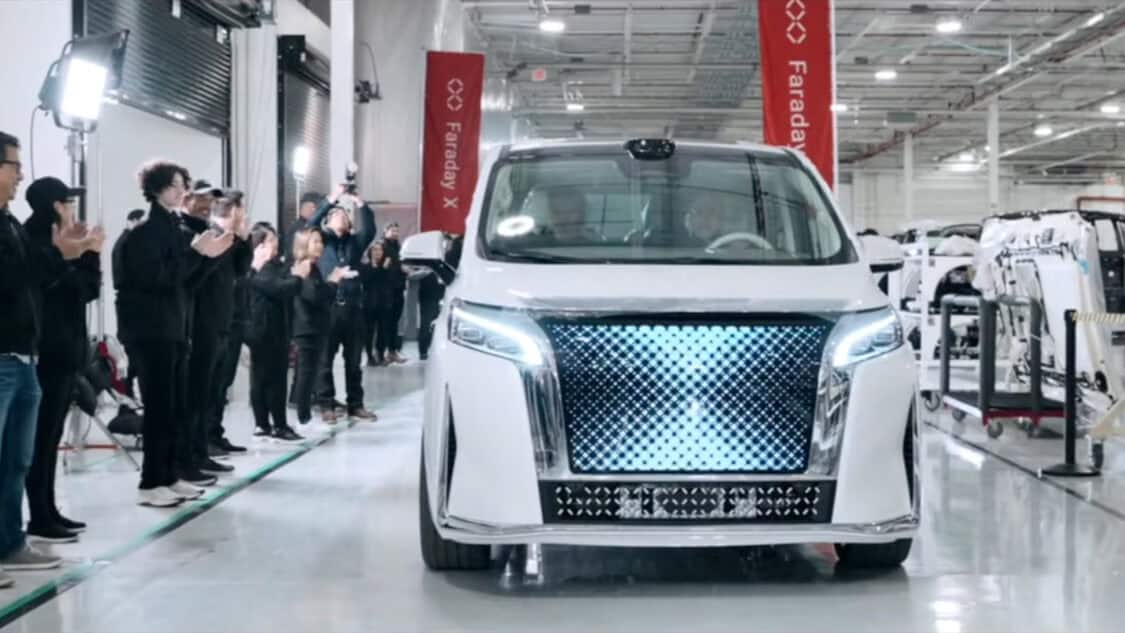
Faraday Future Intelligent Electric Inc. confirmed that the first FX Super One pre-production MPV has come off the line. The vehicle was built at the company’s FF AI-Factory California facility.
This took place inside Faraday Future’s 1.1 million-square-foot manufacturing site in Hanford. The facility already builds the FF 91 2.0 flagship EV. Roughly $300 million has gone into the site so far. With additional approvals and capital, the factory has the capacity to support annual output exceeding 30,000 FX vehicles.
That number tends to wake people up, especially those who track EV production capacity in the United States and know how rare domestic MPV programs have become.
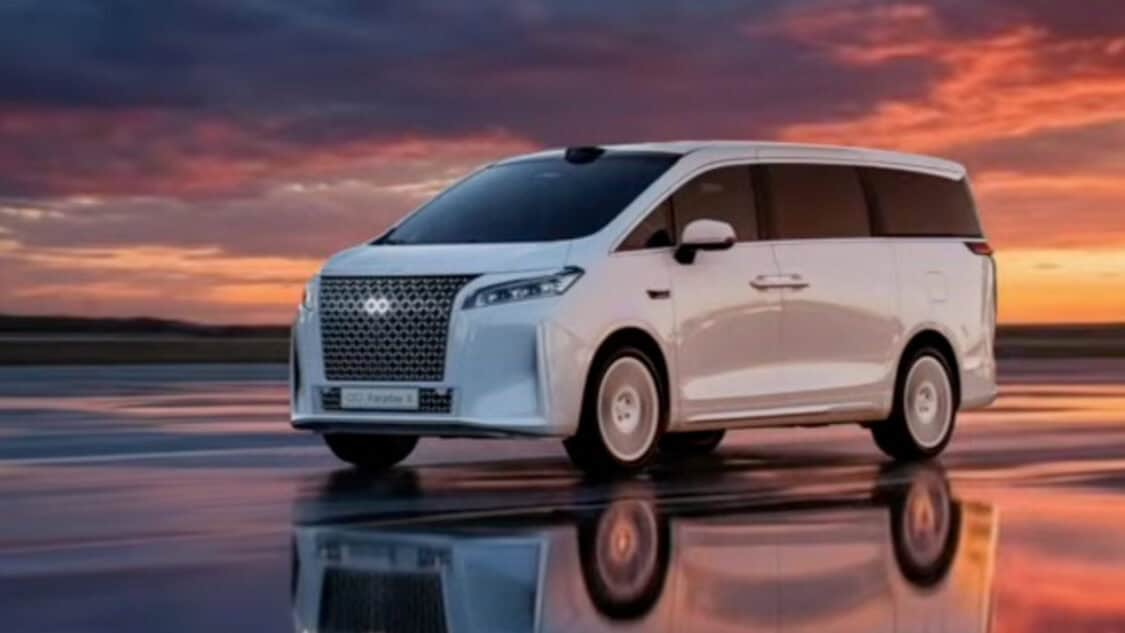
The FX Super One sits in a space where American buyers usually have slim pickings, a premium multi-purpose vehicle built for family life, workdays, and everything that fills the gap between the two.
Multiple rows, real legroom, subtle ambient lighting, and entertainment features built for long hours on the road keep passengers comfortable without turning the cabin into a glowing distraction.
It targets the premium mass market, not ultra-luxury pricing, with all-wheel drive planned alongside two powertrain options. Buyers can expect a battery-electric (BEV) version first, followed later by an AI hybrid extended range configuration (AIHER) which pairs electric drive with a range-extending system guided by onboard artificial intelligence.
ADVERTISEMENT
This pre-production rollout also carries weight internally. It validates localized development, assembly processes, and testing protocols, the unglamorous work that separates functional vehicles from slideshow decks.
Engineers can now run homologation testing, user experience validation, and real-world evaluations with hardware built under production conditions. For customers who placed early reservations, this moment is proof as the first tangible response to that faith.
YT Jia, Founder and Global Co-CEO of Faraday Future, called the FX Super One “a new species that pioneered the era of Automotive Embodied AI,” adding that “the successful roll-off of the first FX Super One marks a critical initial phase before mass production and delivery, and the achievement of our top KPI for year 2025.”
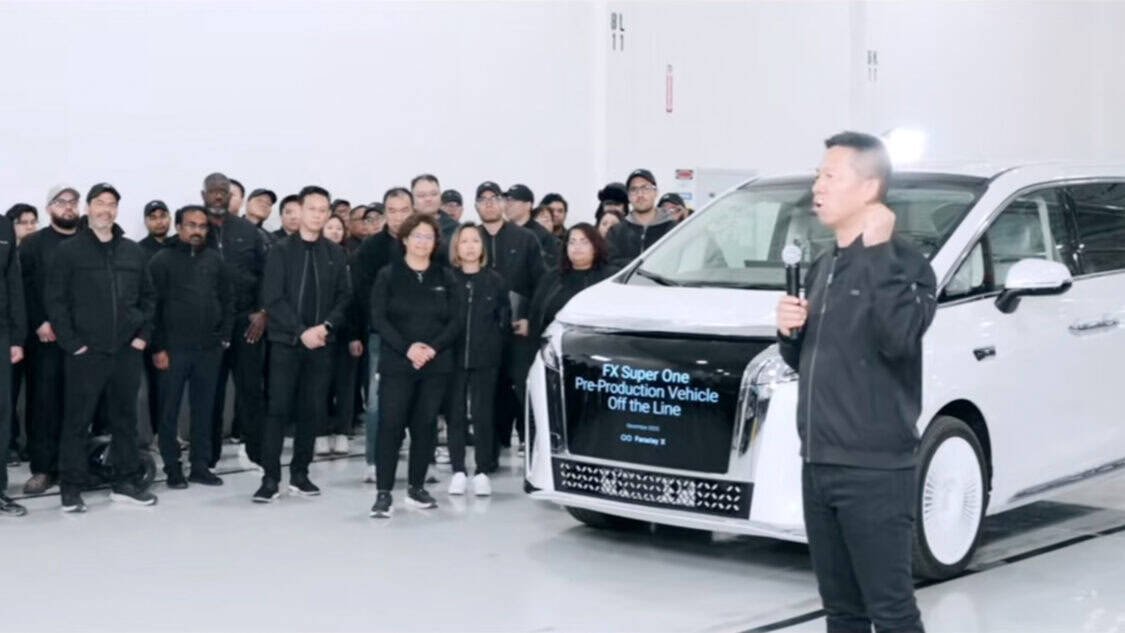
He continued, “For FF, FX, and even the broader US automotive industry, this is a moment worth remembering. Congratulations to everyone who has played a part in this achievement.”
Corporate language, sure, yet grounded in a physical vehicle sitting on a factory floor.
The company plans to build momentum during CES in Las Vegas on January 7, where it will host a Bridge Strategy upgrade and product preview event, along with an FF Stockholders Day.
Executives plan to discuss production ramp-up, sales strategy, service infrastructure, and delivery timelines for the Super One. During CES, Faraday Future will also begin a nationwide co-creation and experience program tied to 2026 sales, an approach that invites early users into feedback loops rather than leaving refinement solely to internal teams.
There’s another angle worth paying attention to here. The FX Super One becomes Faraday Future’s first high-volume vehicle, coming after the FF 91 entered production in 2023.
ADVERTISEMENT
Internally, the company treats this as a completed loop within its Global Auto Industry Bridge Strategy, built to support faster expansion across future FX models.
The same factory, production methods, and supplier network carry over from one model to the next, cutting down on reinvention and keeping momentum intact.
There’s also a manufacturing reshoring angle that rarely surfaces without politics muddying the water. The Hanford facility supports domestic assembly and flexible mixed-line manufacturing, allowing multiple models to share infrastructure.
For an industry that spent decades outsourcing complexity, that flexibility carries practical value.
Quality control sits front and center as production continues. Faraday Future stated that it will follow industry best practices while continuously improving processes as more vehicles come off the line.
This approach matters because early production errors tend to haunt EV brands long after launch. Tight tolerances, consistent validation, and disciplined process control reduce that risk.
Then there’s the tech layer, which extends past seats and screens. Faraday Future also ties the FX Super One to future on-chain ownership verification and EAI plus real-world asset products, blending electric vehicles with blockchain infrastructure.
This concept remains early, yet it hints at how digital ownership, software updates, and asset tracking could intersect in coming years.
For context, Faraday Future started back in 2014 with a clear focus on intelligent electric vehicles built around the driver, not the other way around. The FX brand takes ideas and technology first seen in the FF 91 and brings them into a lower price range, while keeping the materials, comfort, and tech people expect from a premium vehicle.
That goal has raised eyebrows over the years. Seeing an actual FX Super One roll off a production line makes that skepticism harder to hold onto.
ADVERTISEMENT

IMAGES: FARADAY FUTURE; FARADAY X
FTC: We use income-earning auto affiliate links. Learn more.