- The Rictor X4 ultralight eVTOL launched at CES 2026 for $39,900, and it can be flown legally without a pilot’s license under FAA Part 103.
- The X4 uses a proprietary Dynamic Balance Algorithm and dual-battery redundancy to improve stability and safety in flight.
- FAA Part 103 allows single-seat ultralights to operate without pilot certification or medical certificates, though daytime and airspace restrictions apply.
ADVERTISEMENT
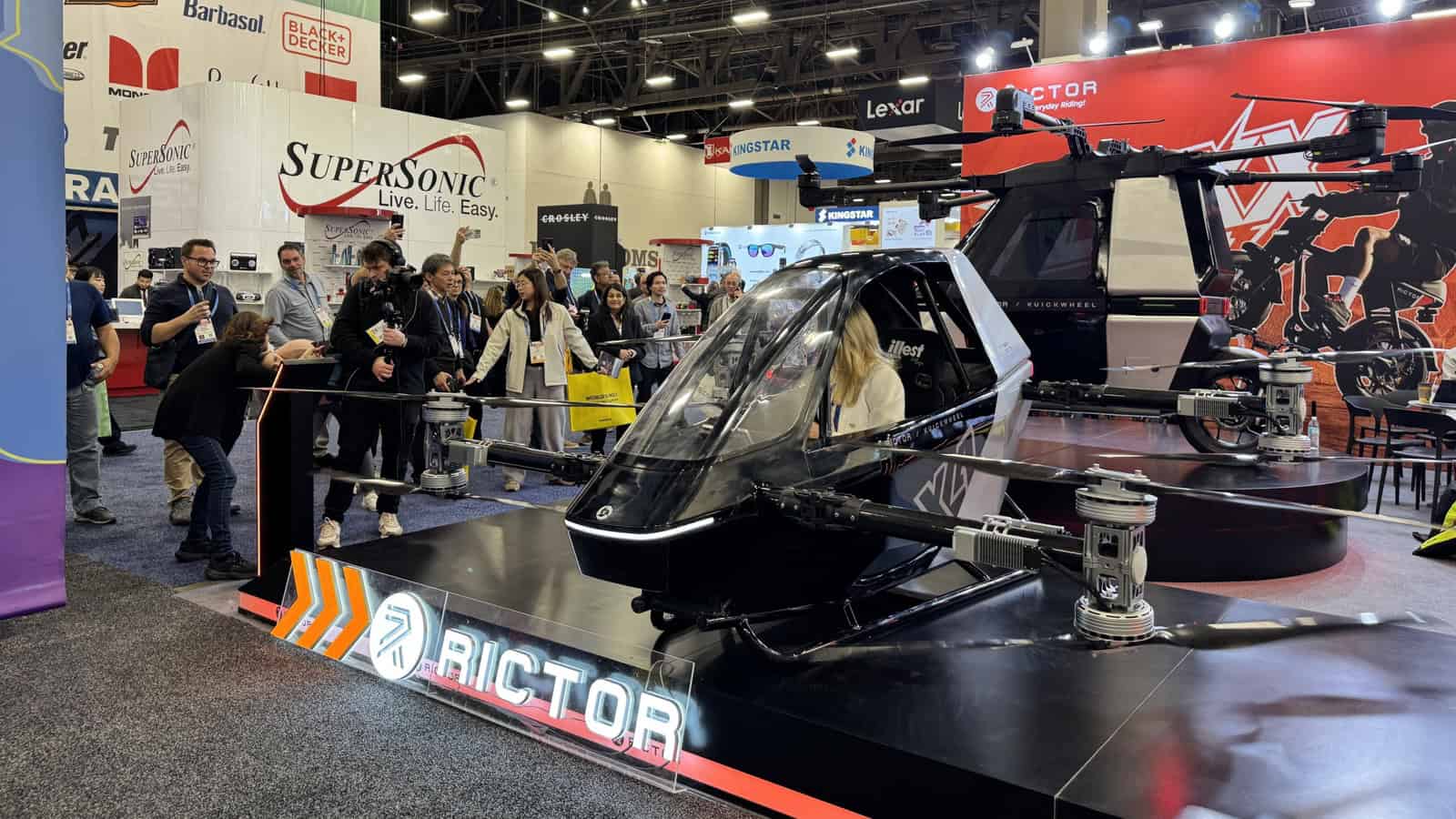
At CES 2026 in Las Vegas, Rictor gave everyone who ever looked up at a drone and daydreamed about being inside it something tangible to talk about. They pulled the cover off the X4 Air Mobility Pod, a single-seat ultralight electric vertical take-off and landing aircraft priced at $39,900, and yes it can be flown legally without a pilot’s license in the U.S.
Most of what people think of as aviation feels out of reach, expensive, complicated, regulated to the hilt. Not this. The X4 falls into the Federal Aviation Administration’s Part 103 category, meaning you don’t need pilot certification or airworthiness certification to operate it as long as it stays within the ultralight rules for recreation.

This is an aircraft with eight electric motors and folding carbon-fiber propellers that fits in the bed of a pickup truck. You drive out to an open field, unfold it, and you are airborne without the usual friction that comes with flying.
Rictor built the X4 around a Dynamic Balance Algorithm that continuously fine-tunes motor output, keeping the aircraft steady even when winds pick up. Sound stays under 65 decibels, quieter than plenty of scooters rolling past a front porch after dinner.
A dual-battery system adds a safety net, so a single battery failure still leaves enough power for a controlled landing. The aircraft can hover as low as three meters off the ground, and control options range from pre-planned routes to hands-on manual input in real time.
The FAA’s Part 103 rules are straightforward once you read them closely. They’re designed for single-seat aircraft used for sport and recreation, and they waive pilot certification and medical requirements to make ultralight flying accessible.
You still have to avoid busy airspace unless you have permission and keep flights limited to daylight hours. Even with those rules in place, the entry point for human-powered or simple electric flight feels far less intimidating than most people expect.
ADVERTISEMENT
At the Rictor launch, the CEO of Kuickwheel Technology made an interesting point. He said the company wasn’t trying to compete with certified aviation companies on big jets or traditional helicopters, but rather open an entirely different category of personal mobility.
That idea deserves a closer look. Private aircraft usually start well into six figures, sometimes far higher, and the licensing process alone demands years, not months. Training hours, exams, medicals, constant upkeep. The barrier feels permanent. By contrast, the thought of flying something compact enough to haul behind a pickup, gear and all, sounds dreamy because it has been mostly fictional until now.
There’s a bit of tension in the industry right now because other companies at CES are also pushing the idea of low-altitude personal flight without a license. For example, Coolfly is showing its own ultralight electric aircraft that sits more like a scooter you stand on while flying.
That one also fits within the FAA’s ultralight regime, and its pitch is that everyday commutes or short aerial hops might eventually replace a slow crawl through traffic.
For decades, aviation has been fenced off by cost and red tape. Now you have vehicles under Part 103 that can be flown recreationally without a license or traditional certification, pushing personal flight closer to a weekend hobby than a military or commercial dream.
That’s huge because it opens up that experience to a much wider group of people. You still need to understand safety, winds, and basic principles of lift and control, but the count of barriers that once made flight feel exclusive has been trimmed dramatically.
ADVERTISEMENT
The X4’s ability to fold into a compact 1.2 cubic meters means you can actually bring it places. Not “park at a fixed base operator and wish you could fold up and go” places, but real places like national parks, lakes, or rural fields.
The battery system supports in-vehicle charging. That detail may slip under the radar for many. Still, it carries real practical value because you avoid reliance on hangar infrastructure or dedicated charging stations. You could literally charge up on the way to your next stop.
A couple of years ago, people would have laughed at the idea of a pilotless ultralight aircraft that you can buy for roughly the same price as a nice used car. Today, that’s exactly what Rictor brought to CES 2026 with the X4, priced at $39,900, and scheduled for delivery in Q2 2026 with just a $5,000 deposit.
There’s a ton to learn before these things appear in your local open fields or rural airspaces, but the regulatory groundwork is already in place.
Safety will remain the top concern for regulators, local communities, and anyone standing next to one of these at takeoff. Ultralights have been around for decades, and the FAA’s rules reflect a balance of freedom and risk.
But electrification, smart control systems, and redundancy in power are making these machines safer and more reliable than the kit ultralights of the past. What matters now is how operators use them, and where they fly them.
ADVERTISEMENT

IMAGES: RICTOR
FTC: We use income-earning auto affiliate links. Learn more.