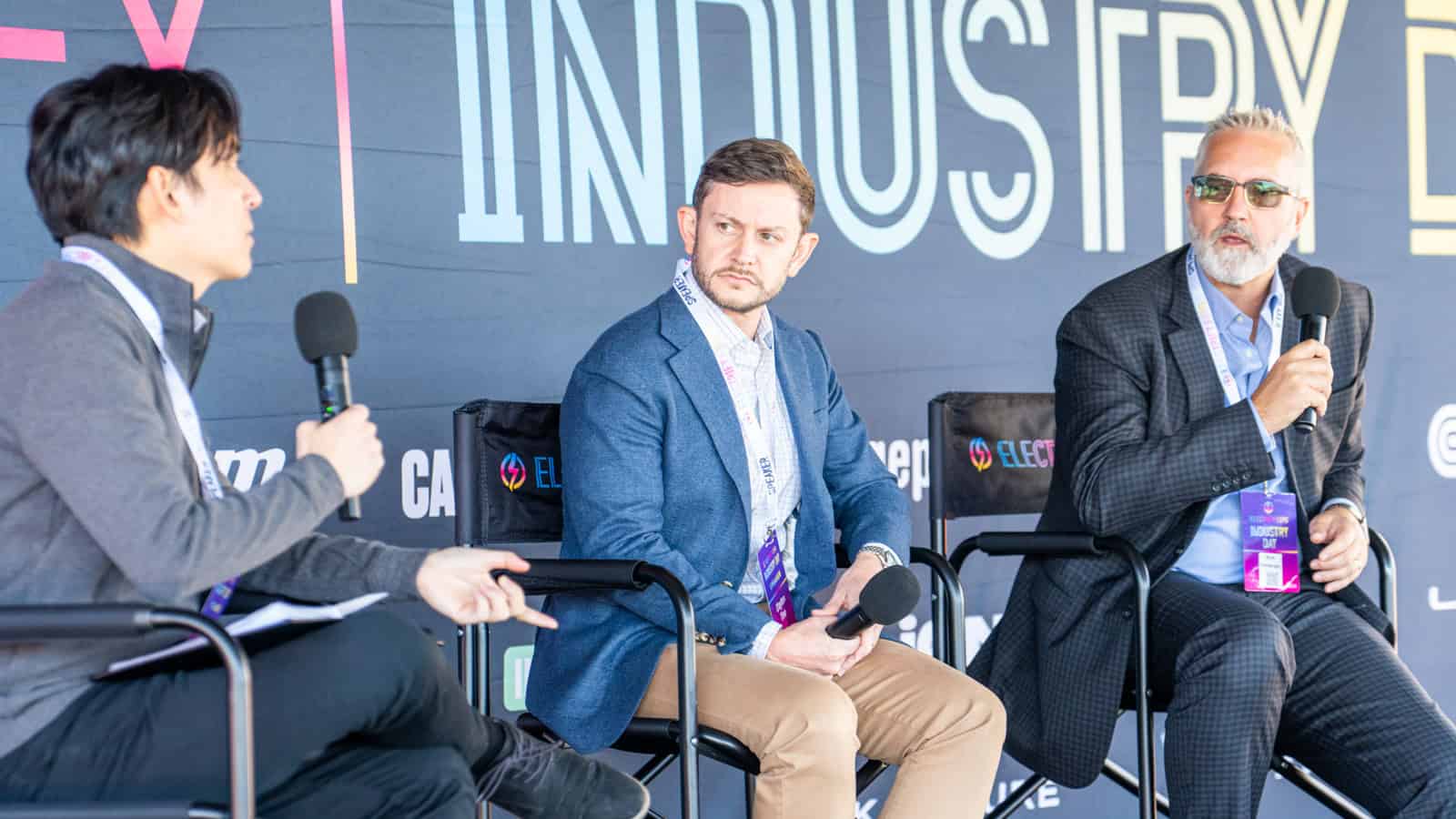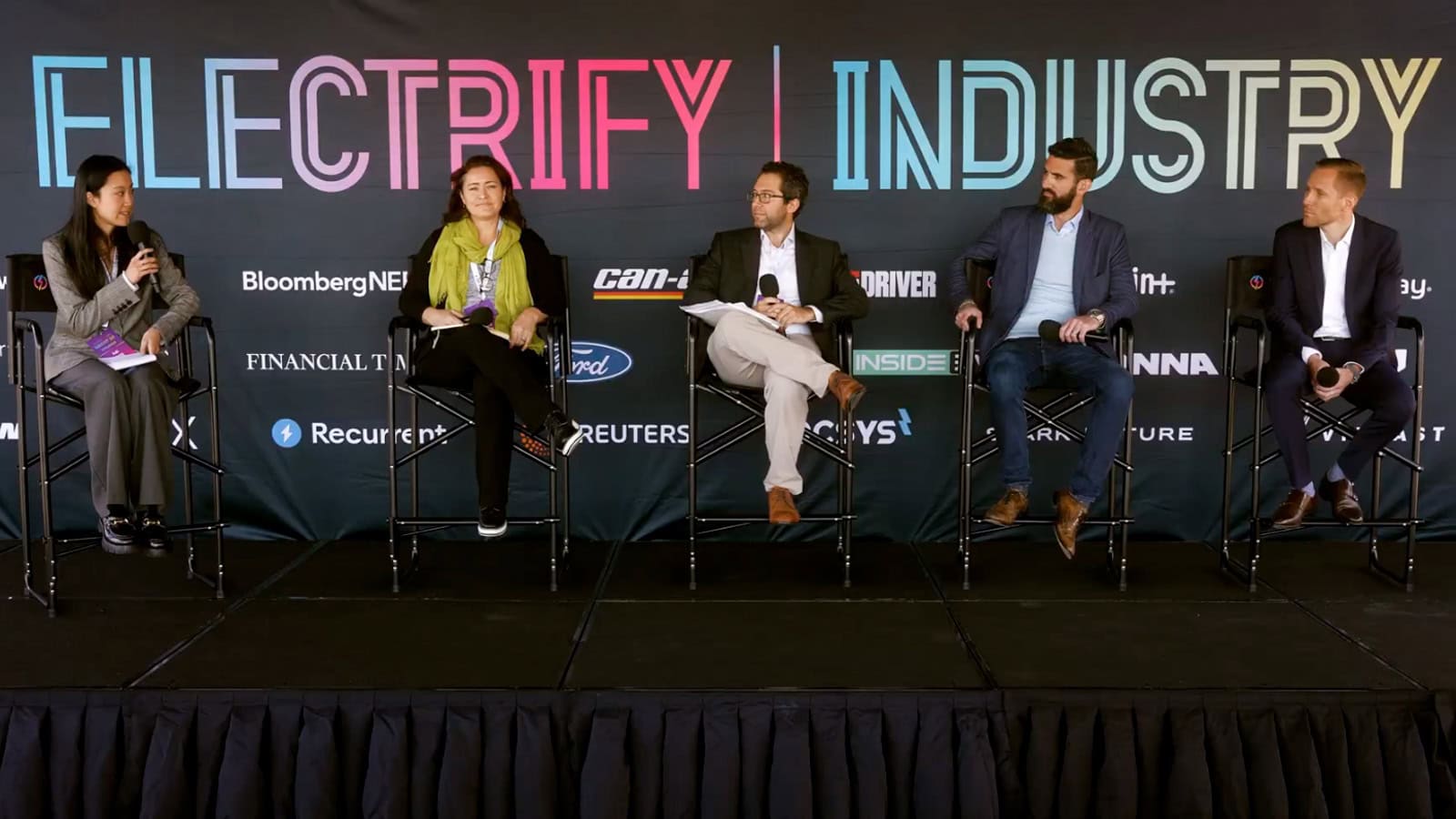
One out of every ten new cars in the United States plugs in, and BloombergNEF expects that number to climb sharply this decade. That rise puts pressure on public charging and fast charging, and Electrify Expo Industry Day New York tackles that tension head-on in its panel, “Building the Backbone Powering EV Adoption.”
Ash Wang from BloombergNEF explains that the US has roughly one public connector for every 28 EVs. The global average sits closer to one for every 11. The International Energy Agency adds that the US needs around 58,000 new public charging points each year to pass half a million by 2030. Most drivers rely on home charging for daily use. Public fast charging still plays a key role for road trips, apartment living, and anyone without a place to plug in at home.
ADVERTISEMENT
Alexander Schleicher, the Head of e-mobility Strategy at BMW, focuses on reliability and access. He explains that drivers will gain Tesla Supercharger access through the NACS port in 2025. Corey Cantor, the Research Director of ZETA, notes that many drivers still worry about cost and public charging coverage. He also points out that federal NEVI funds have progressed slowly, and legal fights have added friction to the rollout.
Operators bring the human side. Marcy Bauer, Senior Vice President of Customer Experience and Funding at EVgo, reminds everyone that drivers focus on one simple goal. They want to plug in, walk away for a moment, and return to a car that gained the energy they needed. Their work with GM has produced more than 2,000 shared fast charging stalls across over 30 states.
Ionna’s CEO, Seth Cutler, brings humor into the discussion. He points out that a country capable of incredible feats in the past should have no trouble getting public chargers to work smoothly. He makes the case that drivers simply want equipment that starts a session without strange glitches. Ionna plans more than 30,000 ultra-fast bays by 2030, with stronger lighting, better sites, and simple reliability.
ADVERTISEMENT
The US Department of Energy (DOE) estimates that roughly 28 million charging ports will be needed by 2030. Most of these will be installed at homes. Public chargers remain the visible part of that system, so consistency matters. Corey points out that improving ranges, lower operating costs, and better charging speeds will help calm old fears.
Three key facts to remember. The US has roughly one public connector for every 28 EVs. Federal NEVI funding totals $5 billion for public charging, but progress has moved slowly. Private networks such as EVgo and Ionna are adding thousands of fast charging stalls with stronger reliability and Tesla-compatible access.
ADVERTISEMENT

VIDEO: ELECTRIFY EXPO
FTC: We use income-earning auto affiliate links. Learn more.