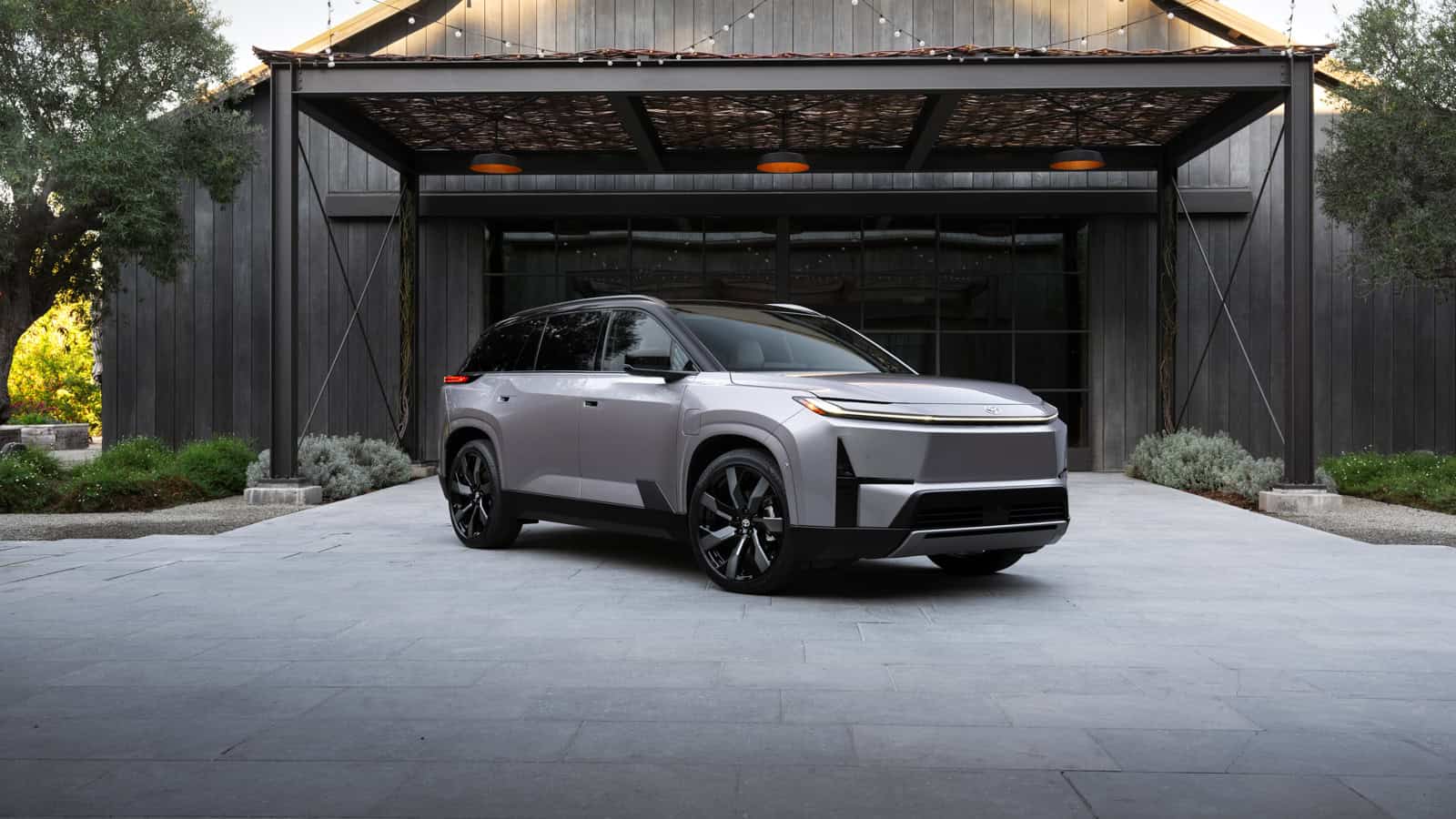
- The Highlander EV offers up to 320 miles of estimated range with all wheel drive and the larger battery.
- It is Toyota’s first three row electric SUV for the U.S. market and the first Toyota EV assembled in America.
- The vehicle uses a NACS charging port with access to Tesla Superchargers.
ADVERTISEMENT
For two decades, the Highlander has been the SUV people chose for space, reliability, and zero drama. It handled school runs, long road trips, and Sunday Costco parking lots without ever asking for attention.
Now Toyota has taken that familiar name and placed it directly into the most competitive corner of the auto business, the three row electric SUV segment.


The 2027 Toyota Highlander EV feels less like a science experiment and more like a calculated business decision that reads the room correctly. Americans keep buying midsize SUVs. They like names they recognize. They like vehicles built domestically. And they want electric options that fit real life without homework.
So here comes Toyota’s first three row electric SUV for the U.S., built in Kentucky and wearing a badge buyers already trust. The name avoids alphabet soup branding and needs no explanation on the showroom floor. It is simply the Highlander, now electric.
Toyota spent years frustrating EV fans by leaning hard into hybrids while competitors poured billions into battery electric lineups and absorbed painful losses. Now global EV demand has cooled, Chinese competition has tightened margins, tariffs loom large, and suddenly Toyota’s caution looks less stubborn and more strategic.
ADVERTISEMENT
New CEO Koji Sato and finance chief Kenta Kon inherited a company that stayed profitable by refusing to sprint blindly. The Highlander EV feels like the moment Toyota finally cashes that patience in.
The EV SUV covers what most buyers actually care about, and it does so without chasing online applause. Toyota keeps the lineup simple with two trims, XLE and Limited. Buyers can choose front wheel drive or all wheel drive, along with either a 77 kWh battery or a larger 95.8 kWh pack.


In all wheel drive form with the larger battery, the Highlander reaches an estimated 320 miles of range and produces 338 horsepower with 323 lb-ft of torque. Front wheel drive models generate 221 horsepower and 198 lb-ft of torque. On paper that may sound restrained, but this SUV carries seven passengers and their cargo while running purely on electricity.
Inside, Toyota leaned into modern tech without turning the cabin into a tablet showroom. A 14 inch central touchscreen. A 12.3 inch digital gauge cluster. Wireless Apple CarPlay and Android Auto. USB-C ports everywhere, including the third row, which feels like Toyota finally acknowledging that kids grow up with devices, not Game Boys.


There is a fixed panoramic glass roof described by Toyota as “the largest ever offered by the brand,” which feels dramatic until you sit under it and realize they might be right.
The infotainment system runs on AT&T 5G connectivity with a customizable home screen, natural voice commands triggered by “Hey Toyota,” dual Bluetooth phone pairing, and built in Spotify and SiriusXM streaming. It feels current without feeling fragile. That balance matters.
ADVERTISEMENT
Charging, the real anxiety point, looks refreshingly straightforward. The Highlander EV uses a NACS port, which means access to Tesla Superchargers. Under DC fast charging, Toyota estimates a 10 to 80% session in roughly 30 minutes.
Battery preconditioning comes standard and can be triggered manually or automatically through Toyota’s Drive Connect service. Level 1 and Level 2 charging work as expected, and a dual voltage charging cable comes standard.

There’s also vehicle-to-load capability. Toyota confirms the Highlander EV can function as a mobile power source and, with optional bidirectional equipment, provide backup electricity during a blackout. The company keeps expectations grounded for now and says more details will come later, which feels deliberate.
From a size perspective, this SUV lines up with the Rivian R1S, Kia EV9, and Hyundai Ioniq 9, squarely within the three row electric category buyers already recognize. At 198.8 inches long with a 120.1 inch wheelbase, it fits comfortably into the driveway dimensions Americans already live with.
The third row accommodates two adults without apology. Fold that row flat and cargo space opens up to more than 45 cubic feet. The result feels practical, predictable, and clearly intentional.


Toyota built this in Kentucky at a time when domestic production reduces exposure to tariffs and political whiplash. It sells into the most profitable segment in the U.S. market. It uses a name people already know.
Toyota even seems comfortable admitting past branding misfires. The company moved away from the bZ naming confusion, which required a footnote just to explain itself. Highlander requires none.
Pricing remains under wraps until production starts later this year, but expectations land squarely in competitive territory. Toyota also has momentum. The refreshed bZ recently ranked fourth in U.S. EV sales, ahead of vehicles like the Ioniq 5 and Mustang Mach-E. The electric C-HR and bZ Woodland arrive next. The cadence finally feels intentional.
ADVERTISEMENT

IMAGES: TOYOTA
FTC: We use income-earning auto affiliate links. Learn more.