- Battery electric vehicles captured 17.4% of EU new car registrations in 2025, totaling 1.88 million vehicles.
- Hybrids led all powertrains with a 34.5% market share, or 3.73 million registrations.
- gas and diesel combined dropped to 35.5% of the market, down nearly ten points in one year.
ADVERTISEMENT
Europe’s new car market barely grew in 2025, up just 1.8%, according to the latest EU registration report. This may feel flat by any historical comparison, but battery electric vehicles climbed to 17.4% of all new car registrations. The economic backdrop stayed the same, and pressure on household budgets stayed real. Even so, buyers made very different choices.
That number represents 1,880,370 new battery electric cars sold across the EU in a single year. One year earlier, that share sat at 13.6%. Buyers faced the same inflation pressure and the same economic stress, yet purchasing habits changed anyway.

And the growth concentrated where infrastructure, incentives, and model availability lined up. Germany posted a 43.2% increase in battery electric registrations. The Netherlands rose 18.1%. Belgium and France both cleared double digit gains.
Hybrids quietly tell an even bigger story. Hybrid electric vehicles, including mild and full hybrids, grabbed 34.5% of the EU market. That is 3,733,325 vehicles in one year. Spain jumped 23.1%. France jumped 21.6%. Germany added another 8%. Italy followed closely.
Plug-in hybrids also climbed to 1,015,887 registrations, now 9.4% of the market, up from 7.2% the year before. Spain’s plug-in hybrid volume more than doubled. Italy jumped 86.6%. Germany rose 62.3%.
Gas and diesel combined fell to 35.5% of the market, down from 45.2% just one year earlier. Gas alone dropped 18.7% across the EU. France collapsed by 32%. Germany fell 21.6%. Italy dropped 18.2%. Spain slid 16%.
ADVERTISEMENT
Diesel fared worse, down 24.2% overall, landing at a single digit market share of 8.9%. December year over year declines alone hit 19.2% for gas and 22.4% for diesel.
This is where many readers tend to shrug and say Europe plays by different rules. Smaller roads, higher fuel prices, different tax structures. Those are fair observations. Still, buying habits tend to follow familiar patterns once the conditions align.
Europe didn’t switch overnight. Buyers started with hybrids, then gravitated to plug-in hybrids. Battery electric vehicles gained traction later, once prices became more competitive and public charger reliability improved.
Europe’s electrification arc looks very familiar when we look at U.S. vehicle data. According to data by Kelley Blue Book, in 2025, electric vehicles in the U.S. accounted for about 7.8% of all new cars sold, with total EV sales finishing near 1.28 million units. Slightly lower than 2024 totals but still notably high despite a dramatic fourth quarter slump.
EV market share peaked at 10.5% in Q3 before dropping to roughly 5.8% in Q4, reflecting the post-incentive downturn after the federal tax credit ended.
ADVERTISEMENT
Tesla remained the largest EV seller even as its share slipped and competitors chipped in. Meanwhile, hybrid sales grew alongside EVs, showing how everyday buyers juggle practicality and efficiency when making purchase decisions.
This reflects how people actually buy cars. They look at pricing, incentives, fuel costs, maintenance, and what ownership feels like week after week, then they decide.
That explains why hybrids keep winning in Europe and keep picking up momentum in the U.S., quietly and without overhype. The drive feels familiar, fuel stops happen less often, oil changes become rare, and daily errands happen without thinking twice about plugging in.
Even Tesla, often treated as an outlier, fits this pattern. Tesla’s EU registrations fell in 2025 while overall battery electric volume climbed. The takeaway is not anti Tesla. It is pro competition.
As Volkswagen Group expanded electric offerings, it captured 26.7% of EU registrations. Stellantis followed with 12.4%. BMW Group grew 5.5% year over year. BYD expanded EU registrations by 167.1%, pushing Chinese electric brands directly into legacy territory.
U.S. automakers see this. Ford CEO Jim Farley admitted, “We are in a global competition with China, and electric vehicles are at the center of it.” You can feel it already across dealer lots in Europe. The U.S. market usually follows that kind of pressure sooner than people expect.
ADVERTISEMENT
None of this required perfection. Europe’s overall vehicle volume remains well below pre-pandemic levels. Consumers still hesitate. Infrastructure still lags in rural areas. Prices still frustrate buyers. And yet electrified powertrains captured over 60% of the market when hybrids, plug-in hybrids, and battery electric vehicles combined.
For U.S. buyers, this feels like a sneak peek at what comes next. Hybrids usually come first. Plug-in hybrids follow once people get comfortable. Battery electric vehicles start picking up traction when prices calm down and charging feels reliable.
Dealers who brush this off will feel the consequences later. Policymakers who treat electrification as optional will scramble to catch up later. Consumers, meanwhile, already made their decisions based on cost, convenience, and what fits daily life.
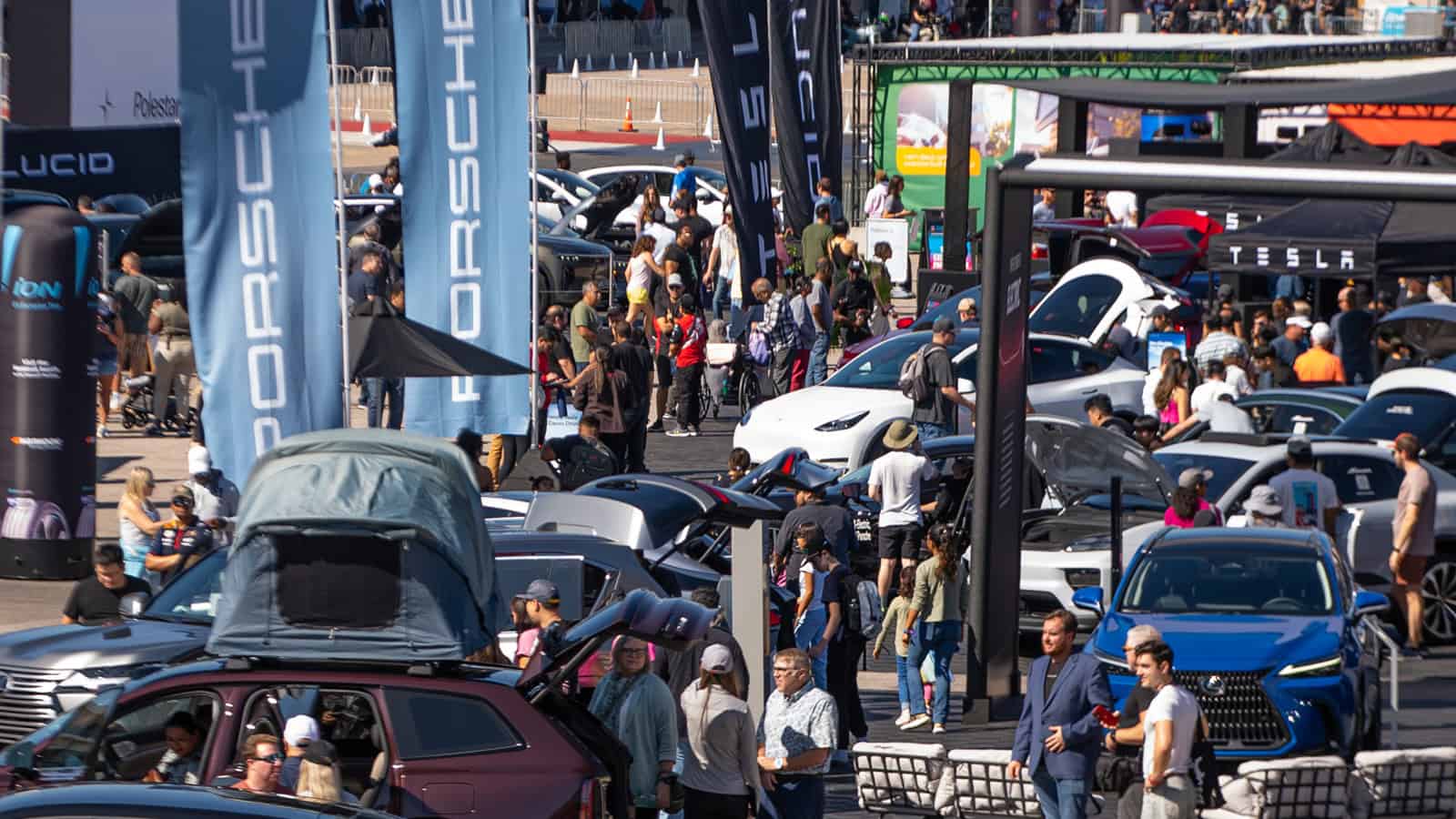
We see this play out on show floors and events like Electrify Expo. People walk in unsure, sometimes openly doubtful. They start with practical questions, how long charging really takes, how batteries hold up over time, what winter driving looks like, and what ownership costs month to month. Then they drive the cars. They talk with owners who use them every day. They run the numbers for themselves. That is when the tone changes completely.
Europe already ran this experiment at scale. And the results are published. They look less like theory and more like a roadmap the U.S. keeps pretending not to see.
ADVERTISEMENT

SOURCES | IMAGES: ACEA, KELLEY BLUE BOOK | ELECTRIFY EXPO
FTC: We use income-earning auto affiliate links. Learn more.