- The 2026 Jeep Grand Wagoneer begins under $65,000 in base 4×4 trim.
- A range-extended electric (REEV) option offers 647 hp, 620 lb-ft, 0-60 in about 5 seconds, and over 500 miles of total range.
- The Grand Wagoneer will carry the Jeep badge across all trims for the first time in 2026.
ADVERTISEMENT
What if your idea of a luxury family SUV came with both electric hustle and gasoline muscle? And without demanding six figures. That’s essentially what the 2026 Jeep Grand Wagoneer is promising. The new model arrives with attention-grabbing specs, a refreshed identity, and a price tag that might make some people look twice.
So, what’s really new here? And will Jeep pull this off?

For a full-size, three-row SUV carrying Jeep’s flagship badge, that “starting under $65,000” price turns heads. It opens the door for more families to step into the luxury SUV category without the sticker shock.
According to Jeep, the base Grand Wagoneer 4×2 begins at $62,145. While the 4×4 version comes in at $65,145, excluding destination fees and optional upgrades.
As Bob Broderdorf, Jeep’s CEO, explained, “With the refreshed 2026 Jeep Grand Wagoneer, we’re delivering more than just bold design and refined craftsmanship: we’re offering competitive pricing that ensures exceptional value in the large SUV segment.”
ADVERTISEMENT
Yes, there are risks. Some may wonder whether such aggressive pricing means corners were cut. But Jeep is leaning into it. This is part of a lineup simplification, folding what used to be separate Wagoneer variants into a single Grand Wagoneer umbrella. The idea is to make the model hierarchy clearer (and less confusing) to buyers.
Under the hood, the 2026 Grand Wagoneer offers two powertrain options. The first is a carryover of a 3.0-liter Hurricane twin-turbo inline-six (I-6) that remains capable. It delivers 420 horsepower and 468 lb-ft of torque.
In its standard output version, it can tow up to 10,000 lbs. Jeep claims this engine outperforms many competitors’ naturally aspirated V8s, while also emitting less. Technologies like cooled exhaust gas recirculation (EGR) help with efficiency.


The second option grabs attention for good reason. It’s a range-extended electric vehicle, or REEV, and Jeep calls it America’s first in the full-size SUV category, expected to arrive later in the production cycle.
It uses a liquid-cooled 92 kWh battery pack, pouch cells in parallel, positioned centrally to preserve interior space and maintain a flat floor. The gasoline engine isn’t directly driving the wheels. Instead, it turns a generator (130 kW) to produce electricity, which either charges the battery or powers the electric motors at the wheels.
In this setup, the wheels are always driven electrically. Jeep estimates output at 647 horsepower and 620 lb-ft of torque, with a 0-60 time near 5 seconds and a total range (gas + battery) exceeding 500 miles. That gives you “electric” driving for errands, and gasoline support when you push the limits.
ADVERTISEMENT
That said, Jeep is careful to frame the REEV as a complement, not a replacement for internal combustion.
As Micky Bly, head of global propulsion systems at Stellantis, stated: “Our award-winning 3.0-liter Hurricane twin-turbo… delivers outstanding power and capability, while the new range-extended electric system introduces a smarter path to electrification.”
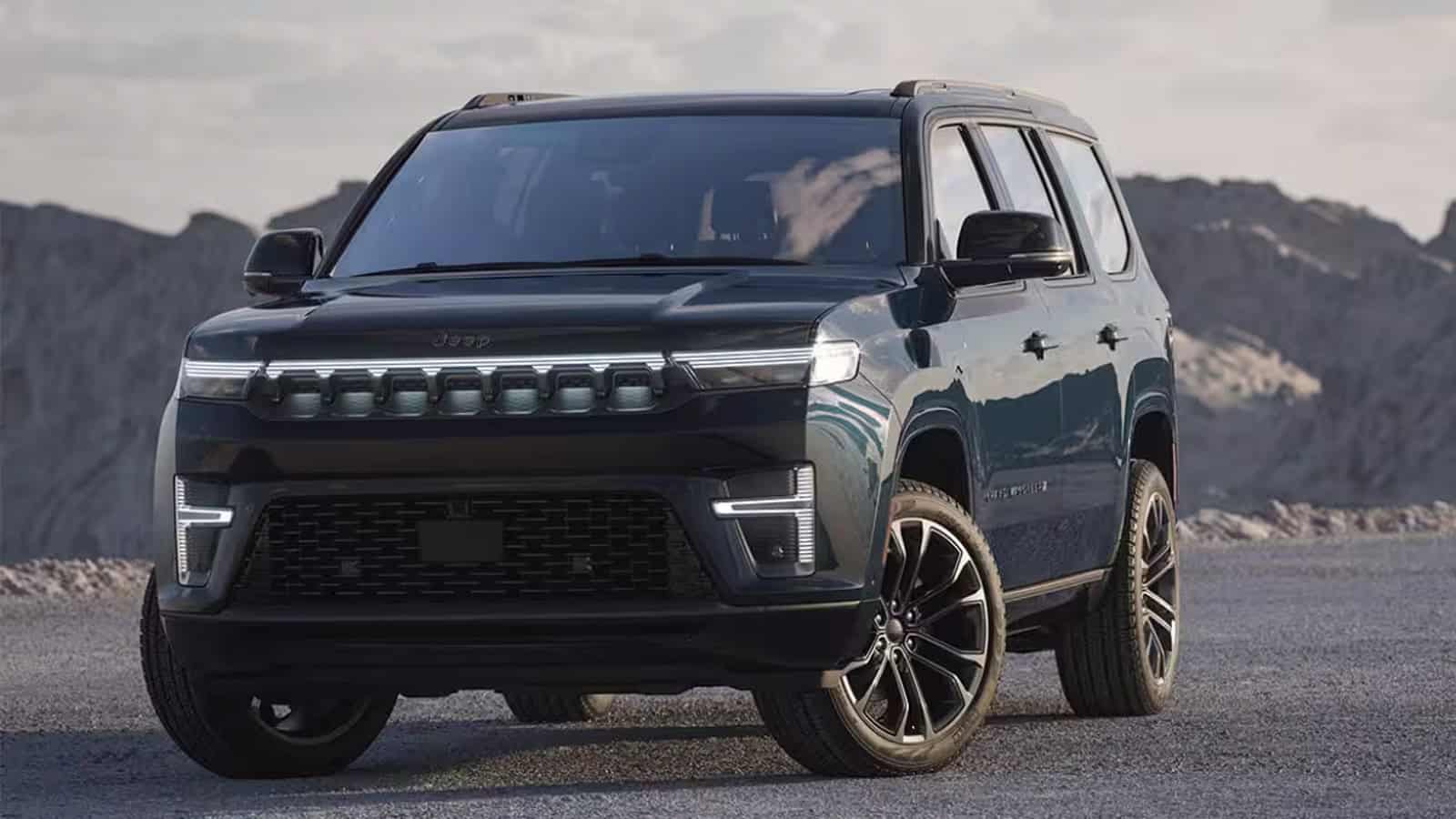
Design-wise, the 2026 model receives a refresh that leans modern, clean, and in many spots daring. The front fascia is more upright, with raised headlamps, a taller hood, and a slim, wide grille anchored by full-width LED lighting. The grille’s iconic seven slots will be illuminated. The lower fascia uses T-shaped LED units. Out back, full-width LED taillamps echo the front’s horizontal motif.
One dramatic update from Jeep is the complete removal of chrome from the exterior. The bright trims and reflective accents are gone. Instead, the design relies on clean surfaces, precise lighting, and sculpted forms to express luxury. It feels like a confident stylistic choice that dares to be different.

Wheel choices range from 18 to 22 inches, offering just the right variety for those who prefer city sophistication or a more capable stance. The cabin has been sharpened too, with a richer, more expressive design language that feels intentional rather than excessive.
Jeep has introduced a larger head-up display with a field of view twice that of earlier versions, giving drivers a clearer visual interface. It comes standard on the Limited trim and above. The Grand Wagoneer and Limited models feature two interior color options: black with Sea Salt or all black, each accented by brushed horizontal trim, painted brightwork, and precise stitching.
Higher trims like the Summit and Summit Reserve elevate the experience further with Palermo quilted leather, open-pore wood, burnished copper stitching, suede headliners, and premium McIntosh audio systems offering up to 23 speakers.
ADVERTISEMENT
For 2026, every Grand Wagoneer will now wear the Jeep badge, uniting the model fully under the brand’s identity. Previous versions were treated as semi-independent under the Wagoneer name, but that changes this year. Bob Broderdorf said that this update reinforces the Grand Wagoneer’s “prominent position within the Jeep family.”
Production will take place in Michigan at the Warren Truck Assembly Plant, alongside the REEV and ICE variants. Jeep has invested $97.6 million to ready operations for electrified models.
Now, will it win hearts? There are challenges. Jeep is reportedly phasing out the standard Wagoneer (non-Grand) for 2026, consolidating the lineup and potentially pushing buyers to upscale models.

Still, for families, road-trip lovers, and SUV fans who want a taste of electric performance without high-end pricing, the 2026 Grand Wagoneer feels like a smart pick. It brings together comfort, capability, and modern technology in a package that appeals to both practicality and prestige.
Time will tell how well Jeep balances those elements, but you can bet many will be paying attention once those first test drives hit the road.
ADVERTISEMENT

SOURCE | IMAGES: JEEP
FTC: We use income-earning auto affiliate links. Learn more.