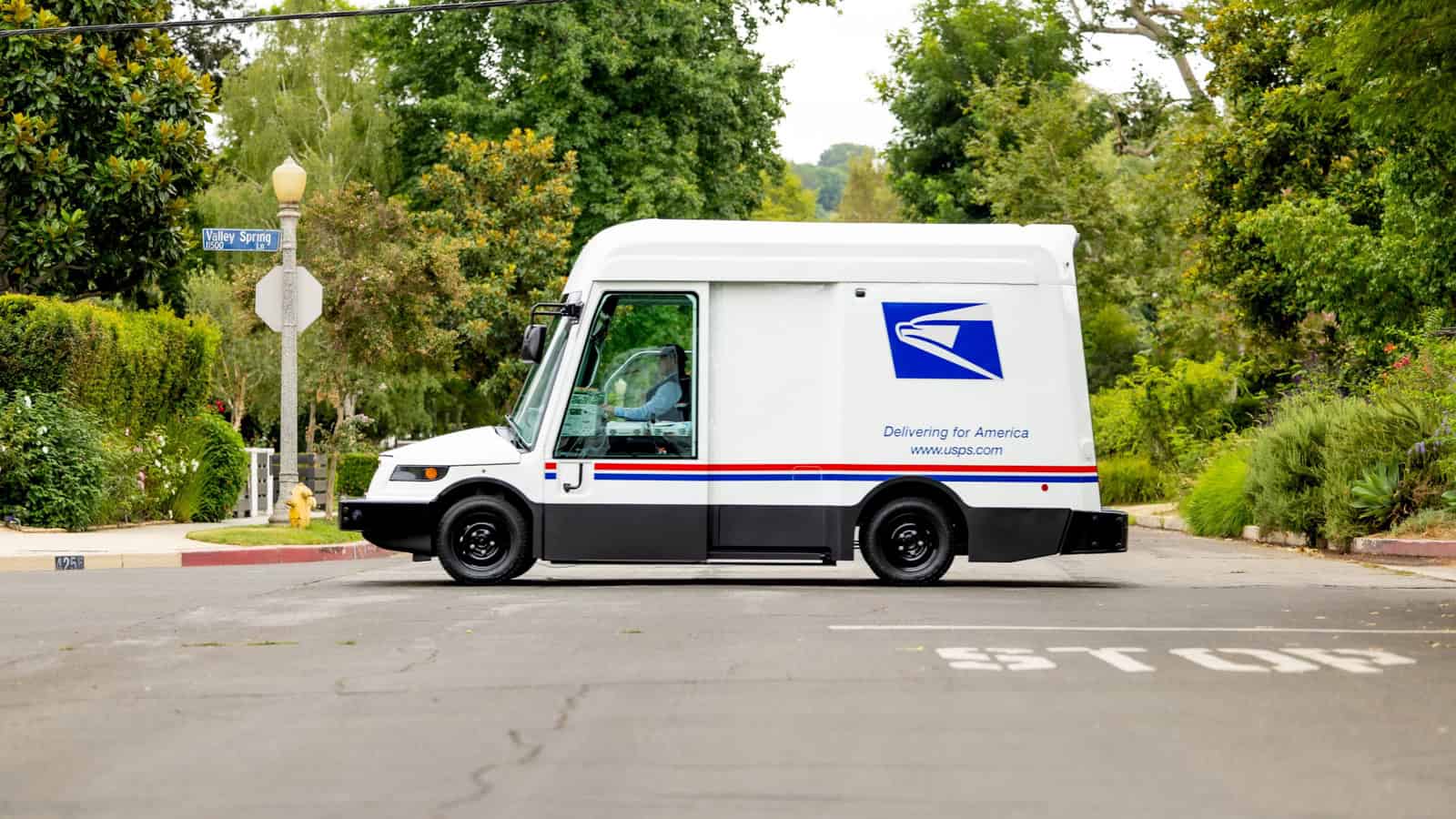
- USPS plans to acquire 106,000 new delivery vehicles by 2028, including 66,000 zero-emission electric vans.
- As of December 2025, over 2,600 electric vehicles already handle mail and package delivery nationwide.
- EV deployment includes Ford E-Transit vans and purpose-built electric vans from Oshkosh Defense, supported by a growing nationwide charging station network.
ADVERTISEMENT
Your next holiday card or package could roll up in a quiet electric mail van rather than one of those older gas trucks that leave a cloud behind. The United States Postal Service (USPS) is accelerating its switch to zero-emission vehicles just in time for the holiday scramble.
You might have heard that USPS has committed to replacing most of its aging delivery vans with new-generation electric models. USPS shared its long-term fleet plan a while ago. By 2028, the goal is to roll out around 106,000 new delivery vehicles, and close to 66,000 of those are planned to be fully electric.
In reality, as of December 2025, more than 2,600 electric vehicles (EVs) are already delivering mail across the country. That includes 2,010 Ford E-Transit vans in active service and 612 purpose-built electric vans from Oshkosh Defense, the manufacturer of the new class of mail trucks.

Why does this matter right now, when the holiday rush feels like a tidal wave of boxes and envelopes? Because the volume jumps fast during this season, and the system feels that weight.
Electric delivery vans help keep things steady. They cut emissions, trim fuel costs, and handle constant stopping and starting far better than the older trucks ever could. Justin Glass, who oversees fleet management at USPS, said the rollout of the new vehicles is moving along as planned.
On top of that, USPS has been upgrading its operations in practical ways. Many local offices and sorting hubs now have charging stations, which helps keep the growing electric fleet running smoothly.
ADVERTISEMENT
The organization also adjusted its service guidelines so mail and packages can move with quicker turnarounds inside the same region, often landing in two to three days.
Those old vans from the eighties came with their own soundtrack, a mix of rattling metal and fumes, plus constant repairs waiting in the wings. Now picture a quiet electric van cruising down your block, carrying gifts, cards, maybe even something unexpected from someone who had you in mind.


Cleaner air. A calmer ride. A simple swap that actually makes sense.
Still, there’s a bit of friction behind the scenes right now. Congress set aside $3 billion back in 2023 through the Inflation Reduction Act to help USPS buy electric vehicles and build out charging stations.
Some critics argue the rollout feels slow so far, since only 612 of the Oshkosh vans are currently on the road. That number has raised questions from people who think the project might be drifting into “green boondoggle” territory.
ADVERTISEMENT
USPS says some delays come from production timelines and figuring out which routes suit these newer electric vans, since a few models struggle in remote areas or rough weather.
They also point out that the number of electric vehicles on the road keeps climbing each week, and the change to cleaner delivery remains a core part of their long-range plan.

You might feel the difference yourself during the holidays. Your gifts can head out with a lighter environmental footprint, which already takes a bit of pressure off your conscience.
On top of that, smoother operations across the system raise your chances of beating those frantic last-minute cutoffs. And while all of this rolls along quietly, you’re also watching a gradual change in how mail reaches homes across the country, humming through neighborhoods with cleaner air and sharper efficiency.
ADVERTISEMENT

SOURCE | IMAGES: USPS, REUTERS | USPS
FTC: We use income-earning auto affiliate links. Learn more.